JUNE 2026 – MIDDLE EAST and AFRICA
PAYROLL AND EMPLOYMENT COMPLIANCE UPDATES
It is important that employers note the following:
Introduction
Several jurisdictions across the Middle East and Africa have introduced employment and payroll changes impacting employer obligations, workforce costs and compliance requirements.
The key changes are outlined below:
MIDDLE EAST
Oman: Social insurance – sick and other leave benefits
As reported in our 11 July 2025 News Flash, Oman postponed the introduction of the Social Protection Fund’s Sick and Other Leave Insurance scheme, which had originally been scheduled to take effect in 2025. At the time, employers were advised that the planned 1% employer contribution had been deferred until further notice.
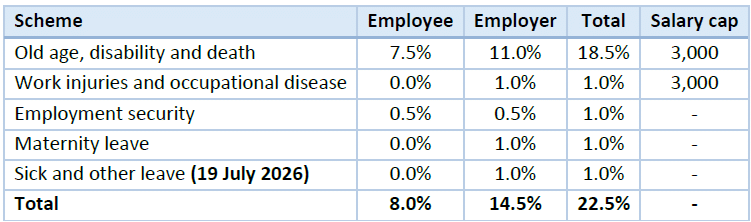
The Oman Social Protection Fund has confirmed that the Sick Leave and Extraordinary Leave Insurance scheme will come into force on 19 July 2026 through Royal Decree No. 60/2025. The scheme applies to Omani nationals in full-time employment and non-Omani employees working in Oman. It will be funded through an additional 1% employer contribution, with no employee contribution required and no wage ceiling applying to the contribution calculation.
To view Royal Decree 60/2025, follow the link.
Saudi Arabia: GOSI contribution increase (new entrants)
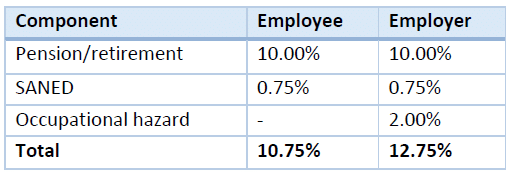
As reported in our 30 August 2024 News Flash, employers are reminded that the retirement contribution rate for employees covered by Saudi Arabia’s New Social Insurance Law will increase by a further 0.5% on 3 July 2026. As a result, both employer and employee retirement contributions will increase from 9.5% to 10.0% of contributory earnings as part of the phased reform programme.
The increase applies to employees entering the workforce with no previous contribution periods under the Civil Pension or Social Insurance systems. Consequently, the overall GOSI contribution rate will increase from 22.5% to 23.5%, comprising employer contributions of 12.75% and employee contributions of 10.75%. The phased reform will continue until 2028, when retirement contribution rates will reach 11% for both employers and employees. Existing contributors remain subject to the legacy contribution rates.
To view the original press release from 2024, follow the link.
UAE: Summer working hours restrictions (reminder)
Employers are reminded of the UAE’s annual midday work ban, a long-standing requirement under Ministerial occupational health and safety regulations (originally introduced in 2004 and currently reflected in Ministerial Resolution No. 44 of 2022).
The Ministry of Human Resources and Emiratisation (MoHRE) has confirmed that the annual summer midday work ban will apply from 15 June to 15 September 2026. During this period, outdoor work under direct sunlight is prohibited between 12:30pm and 3:00pm daily, subject to limited exemptions. Employers are reminded to review working schedules and ensure appropriate heat-stress mitigation measures remain in place.
As the official UAE Ministry publication platforms are inaccessible, a direct link to the Resolution cannot be provided. This reminder is nevertheless based on the formally issued text of Ministerial Resolution No. 44 of 2022.
AFRICA
Kenya: Minimum wage adjustment
Kenya has published revised minimum wage orders covering general employment and agricultural occupations. Legislative Supplement No. 78 (Regulation of Wages (General) (Amendment) Order, 2026), dated 29 May 2026, refers. The changes are deemed effective from 1 May 2026 and apply across multiple occupations, with rates varying by job category and geographic location. Employers may be required to calculate retrospective wage adjustments where current pay falls below the revised minimums.
Key highlights:
- Minimum wages have been increased across all sectors and occupations.
- The structure remains tiered by geographical area, with different rates for:
- Major cities (e.g. Nairobi, Mombasa, Kisumu, Nakuru, Eldoret)
- Former municipalities and selected towns
- All other areas
- Wage rates apply to a broad range of roles, including:
- General labourers
- Domestic workers
- Security personnel
- Clerical and skilled occupations
The revised wage tables provide:
- Monthly, daily and hourly minimum rates
- Rates exclusive of housing allowance (which remains separately regulated)
To view the official wage order, follow the link.
Malawi: Minimum wage increase
Malawi Employment (Minimum Wages) (Amendment) Order 2026 was published in Government Notice No. 44 on 22 May 2026.
Revised minimum wage rates are effective 1 June 2026. The amendments affect general minimum wages as well as specific occupational categories, including domestic workers and cargo truck drivers. Employers should ensure employee remuneration complies with the new statutory thresholds.
Summary of revised minimum wages:
- Domestic workers: Increased from MWK 72,800 to MWK 83,720 per month
- Commercial workers: Increased from MWK 126,000 to MWK 157,500 per month
- Workers in micro and small enterprises: Increased from MWK 105,000 to MWK 131,250 per month
- Shop workers: Set at MWK 187,500 per month
- Employers with annual turnover of MWK 500 million or more: Minimum wage increased from MWK 150,000 to MWK 200,000 per month
- Truck drivers (international routes, vehicles ≥30 tonnes): Increased from MWK 328,300 to MWK 410,375 per month
- Truck drivers (local routes): Increased from MWK 234,500 to MWK 293,125 per month
- Truck drivers (vehicles <30 tonnes): Increased from MWK 140,700 to MWK 175,875 per month
To view the Government Notice, follow the link.
Tanzania: NSSF announces temporary amnesty on outstanding contributions and penalties
The National Social Security Fund (NSSF) has announced a temporary amnesty programme for employers with outstanding statutory contribution arrears and penalties.
Key points:
- Applies to outstanding contributions and associated penalties
- Employers settling arrears within specified deadlines may qualify for:
- Full or partial waiver of penalties, depending on timing
- Employers compliant as at 31 May 2026, and who remain compliant, may also qualify for full penalty relief
Amnesty period:
- Covers obligations between 1 June 2026 and 31 December 2026
To view the NSSF public notice, follow the link.