MARCH 2026 – THE UNITED KINGDOM
PAYROLL CHANGES FOR THE 2026/2027 TAX YEAR
It is important that employers note the following:
Statutory payroll changes effective 6 April 2026
Following the delivery of the Autumn Budget on 26 November 2025, the Finance Act 2026 received Royal Assent on 18 March 2026, confirming the payroll changes effective from 6 April 2026.
A summary of all payroll and tax legislation is provided below.
Income tax thresholds and rates
England and Northern Ireland/Wales
- No change to the personal allowance (£12,570 per year) and main tax bands – the freeze is extended to 2030/31, so fiscal drag continues.
- This means more employees may move into higher bands even without actual pay increases.
Scotland – band changes
The personal allowance remains £12,570 per year, but Scottish income tax bands have changed for 2026/27:

National Insurance Contributions (NIC) – Class 1
- The lower earnings limit increases slightly from £6,500 to £6,708 per year.
- The secondary threshold for employer NICs is reduced from £9,100 to £5,000 per year, significantly broadening the NIC-payable band.
- Employer Class 1 NIC rate increases from 13.8% to 15%.
- Employee (primary) NIC rates and main thresholds remain unchanged for 2026/27.
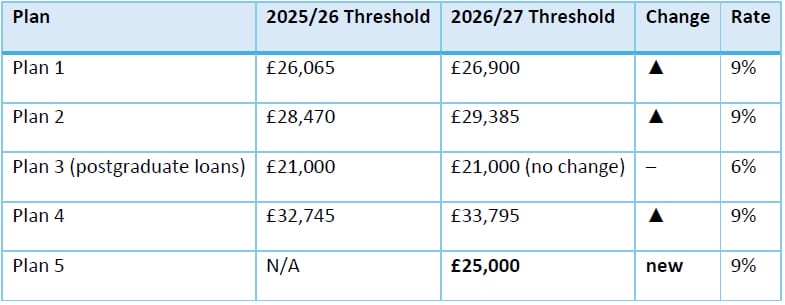
Student loan thresholds – increases + new Plan 5
The government has increased thresholds and introduced Plan 5:
Company car advisory fuel rates – mileage rate changes
Several advisory rates changed from 1 March 2026:
Petrol/LPG – main changes vs previous rates:
- ≤1400cc: 10p (↓ from 11p)
- 1401–2000cc: 12p (↓ from 13p)
- ≥2000cc: 19p (↓ from 21p)
Diesel
- ≤1600cc: 12p (↑ from 11p)
- 1601–2000cc: 13p (no change)
- ≥2000cc: 18p (↑ from 17p)
Electric
- Home charger rate remains 7p per mile
- New: Public charger rate 15p per mile introduced
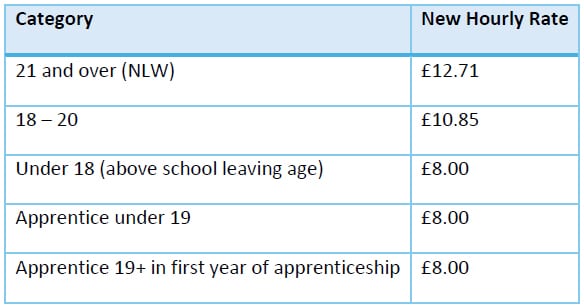
National Minimum Wage (NMW) and National Living Wage (NLW) – rate increases
From 1 April 2026:
Statutory leave payment (family‑related and neonatal) – rate increase and LEL change
From 6 April 2026:
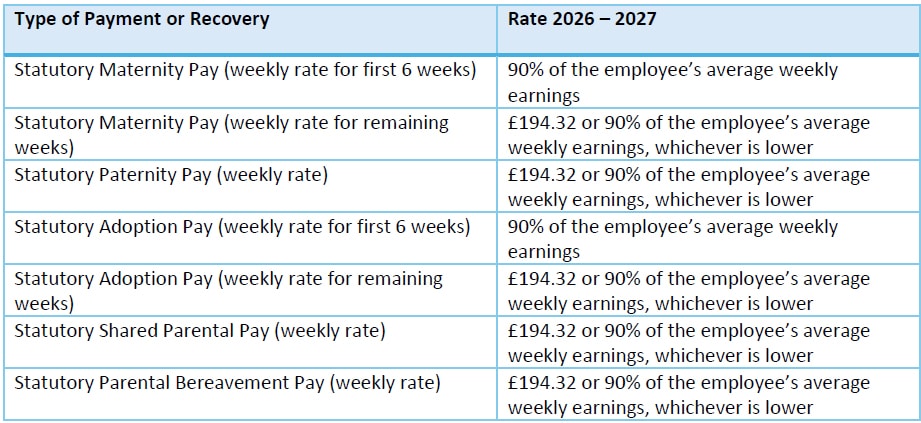
The Lower Earnings Limit (LEL) for statutory payments increases from £125 to £129 per week.
Statutory Parental Bereavement Pay and Leave (SPBL) – extended in Northern Ireland
From 6 April 2026:
- SPBL is extended to cover:
- Child death
- Stillbirth
- Miscarriage (where the miscarriage is discovered on or after 6 April 2026).
- Entitlement: up to two weeks’ leave per qualifying event, taken:
- Two consecutive weeks; or
- Two separate one-week blocks; or
- A single week.
- Pay remains aligned with the new £194.32 / 90% AWE weekly rate.
This is a new qualifying category (miscarriage) compared to 2025/26.
Statutory Sick Pay (SSP) – major reform
Changes to SSP have been introduced through the Employment Rights Act 2025 and will take effect from 6 April 2026.
Key changes vs 2025/26:
- Waiting days removed – SSP now payable from day 1 of sickness (no 3-day unpaid waiting period).
- Lower earnings limit removed – SSP eligibility no longer depends on earning at least £125 per week; all workers, regardless of earnings, may qualify.
- New calculation method:
- SSP is the lower of:
- 80% of average weekly earnings, or
- A flat cap of £123.25 per week for 2026/27 (up from £118.75).
- SSP is the lower of:
This significantly widens coverage for part-time, low-paid and irregular workers and increases employer cost and complexity.
Employment allowance – increase
Employment allowance allows eligible employers to reduce their annual NIC liability by up to the annual allowance amount.
- From 2026/27, the employment allowance increases from the previous level to £10,500 per year for eligible employers (those with prior‑year Class 1 NIC under £100,000).
Apprenticeship levy – rates unchanged
For 2026/27, the structure remains:
- Allowance: £15,000
- Levy rate: 0.5% of the annual pay bill for employers (and connected companies) with pay bills over £3 million.
No structural change vs 2025/26, but the higher NIC/employer costs may change the total payroll burden.
Small Employers’ Relief (SER) – compensation rate increase
From 6 April 2026:
- SER compensation rate increases to 9%, allowing eligible employers to reclaim 109% of statutory parental payments (100% + 9% compensation).
- Eligibility: prior‑year Class 1 NIC liability ≤ £45,000 (unchanged threshold).
This is an improvement on the previous compensation percentage and is designed to support cash flow for small employers.
Official interest rate (ORI) – higher rate and quarterly review
- ORI increased from 2.25% to 3.75% on 6 April 2025 and remains at 3.75% as at March 2026.
- The policy has changed:
- ORI is now subject to quarterly review (possible changes from 6 July, 6 October, 6 January), rather than a no in-year change commitment.
Payroll and benefits teams must monitor ORI for:
- Beneficial loan benefit calculations.
- Certain employer‑provided accommodation benefit calculations.
Additional legislative developments
Dividend tax rate increases (affects directors)
- Dividend ordinary rate increases from 8.75% to 10.75% and the upper rate from 33.75% to 35.75% from 2026/27.
Flu vaccinations – now exempt
- Employer‑funded or reimbursed flu vaccinations are non‑taxable (unless salary sacrifice is used).
Homeworking deductions – restricted
- Employees may no longer self‑claim household cost deductions for home working, unless reimbursed by their employer within HMRC rules.
NEW: Tax treatment of cancelled or moved shifts
The Finance Act 2026 introduces a statutory rule confirming that payments made to employees for cancelled, moved or limited shifts are taxable earnings, and must be taxed in the tax year in which the shift was scheduled to occur, regardless of when the payment is actually made. This ensures consistent PAYE treatment and closes previous ambiguity.
To view the Finance Act, 2026, follow the link.